Min. 100 units · 3–5 days
Foam Inserts for Tool Boxes
Custom Packaging Inserts
Specify thisCustom Packaging Inserts
Made-to-order foam Inserts for Boxes in e-flute corrugated, printed to your artwork and cut to your dimensions.
No obligation
Name, email, phone and what you are packing and how it ships. Attach artwork if you have it. We reply with a specification and a written price, usually within one business day.
Foam protects by compressing. A cavity cut with zero clearance turns it into a rigid block.
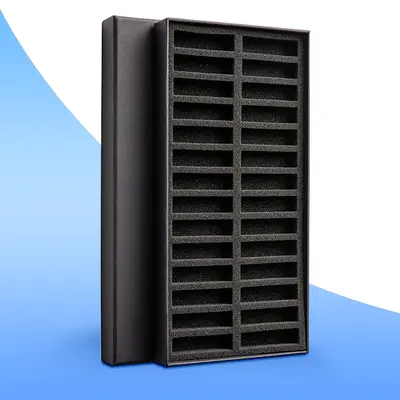
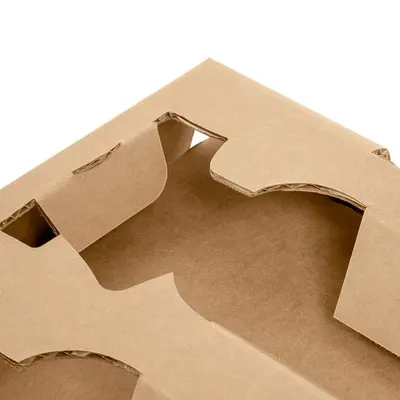
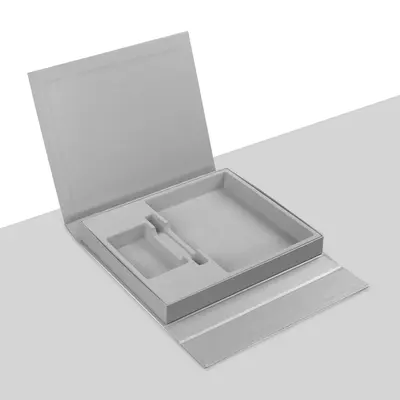
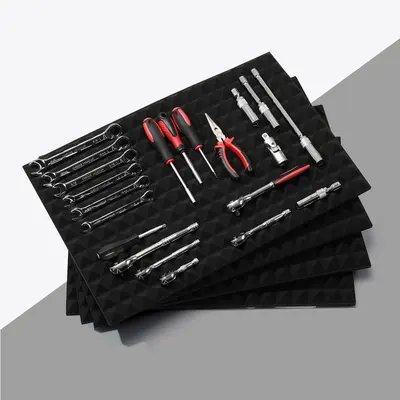
Foam Inserts for Boxes are die-cut from board or routed from foam to hold each item in a fixed position, so nothing shifts between the packing bench and the customer.
Foam Inserts for Boxes hold fragile items needing shock absorption rather than just location. That is the starting point for the specification, because foam protects by compressing. A cavity cut with zero clearance turns it into a rigid block.
In service they are used for electronics, instruments and fragile goods shipped individually.
Where a product needs to be held still, a fitted insert cut to its profile does more for damage rates than a heavier outer board. It usually costs less too, because you can drop a grade on the outer.
PE or PU foam depending on the load; PE for heavier items, PU for lighter and more delicate ones.
The options we would consider for this format are below; foam protects by compressing. A cavity cut with zero clearance turns it into a rigid block.
The cavity is cut to the exact item size, so the foam has no room to compress and transmits shock straight through.
Foam protects by compressing. A cavity cut with zero clearance turns it into a rigid block.
Cut to the item profile with a controlled clearance, since foam compresses where board does not.
Send the contents rather than a box size. A tight cavity is assumed to be better protection, when foam needs compression room to actually absorb anything.
Foam is not printed. If presentation matters, a printed board tray over a foam layer is the usual approach.
Finishes are costed one at a time because each is a separate operation — that way you can see which one is carrying the price.
We can produce a plain unprinted sample so you can check the fit and structure of foam inserts for boxes before committing.
Sample costs are normally credited against the production order.
The useful starting point is the product, not the pack. Give us its measurements and the quantity, and we work the packaging insert outward from there.
You approve the quote, we send the dieline, prepress proofs it, and production follows. The proof stage is where changes are still free.
Reference
| Product | Foam Inserts for Boxes |
|---|---|
| Category | Custom Packaging Inserts |
| Construction | Packaging insert |
| Material | Corrugated, chipboard, moulded pulp or foam |
| Tolerance | 1 mm – 2 mm around each cavity |
| Assembly | Drop-in, no adhesive required |
| Materials | E-flute corrugated, Chipboard, Moulded pulp, EVA foam |
| Printing | Flexography, Digital press, Unprinted natural |
| Finishes | Unprinted kraft, Flood colour, Matte lamination, Fabric wrap |
| Minimum order | Minimum order is 100 units on any format, and unit cost falls sharply as the quantity rises. |
| Lead time | 3 to 5 business days after artwork approval |
| Shipping | Across the US, UK, Canada and Australia |
Specification builder
Set what you know, leave the rest. Everything here travels with your request, so nothing gets retyped.
Drag to rotate
In transit
Cut to the item profile with a controlled clearance, since foam compresses where board does not.
The cavity is cut to the exact item size, so the foam has no room to compress and transmits shock straight through.
Specified for electronics, instruments and fragile goods shipped individually.
Foam protects by compressing. A cavity cut with zero clearance turns it into a rigid block.
This format sits in our custom packaging inserts range, alongside 20 other made-to-order formats.
Answers
Specification, minimums and lead times for foam inserts for boxes.
No — foam protects by compressing, so a cavity cut with no clearance behaves like a solid block and transmits shock straight through. It needs controlled clearance, which is different from a board insert.
Only if boxes are arriving crushed. If they arrive intact with damaged contents, the product is moving inside and a heavier outer changes nothing. A fitted insert solves that case, usually at lower cost.
Yes, and for foam inserts for boxes we prefer to specify both together. A cavity that holds the contents still often lets us drop a grade on the outer, so the pair can cost less than an over-specified box alone.
Board is cheapest and suits light or regular shapes. Foam holds irregular and fragile items better and absorbs shock. Moulded pulp sits between them and is the more recyclable of the cushioning options. Send the item and we will recommend.
Yes. Once a first run is approved we hold the board, structure, dimensions, print method and finishes against your account, so a reorder references the same specification exactly rather than being re-derived. It also means a reorder can be priced against a larger quantity without re-opening the specification.
Recycled grades are available across most of the substrates we run for packaging inserts. Recycled content, kerbside recyclability and certified compostability are three different claims though, so tell us which one you intend to print.
A print-ready PDF or a vector file, with fonts outlined and any raster images at 300 dpi at final size. We supply the dieline to design onto, and prepress checks bleed, safe area and crease clearance before issuing a proof. The dieline we supply carries the crease positions, so keeping type clear of a crease is easier to solve at layout than at proof.
A flat 100 units on any format. Most packaging inserts in this range are quoted from 100 units upward because unit cost falls sharply above that, but the minimum exists so you can validate a structure first.
3 to 5 business days after artwork approval, plus freight. Packaging insert runs with applied finishes can take longer because each finish is a separate pass, and we confirm a firm date in writing with the quote.
Prices start from $0.30 per piece for large-volume orders. For this format the biggest levers are quantity, print route, board grade and how many finishing passes are involved. We quote each element separately so you can see where the money is going. An insert often lowers the total rather than raising it, because holding the contents still lets us drop a grade on the outer.
Yes. We can send a plain unprinted sample so you can check the fit and structure, or a printed prototype for colour and finish. Sample costs are normally credited against the production order. On foam inserts for boxes the thing to check is whether the contents still sit tight once the pack is closed, because movement inside is what causes damage rather than the board grade.
Send the current specification or a physical sample and we will quote to match it rather than proposing an alternative you would then have to re-approve internally. A physical sample tells us more than a specification sheet — board caliper and coating are usually described loosely and measured exactly.
Related formats
Next step
Send the dimensions, the quantity and how it ships. We reply with a full specification and a written price, usually within one business day.