Packaging resources
Packaging Material Guide
Board grades, corrugated flutes, rigid greyboard, laminated films and moulded pulp compared on strength, print quality, cost and recyclability.
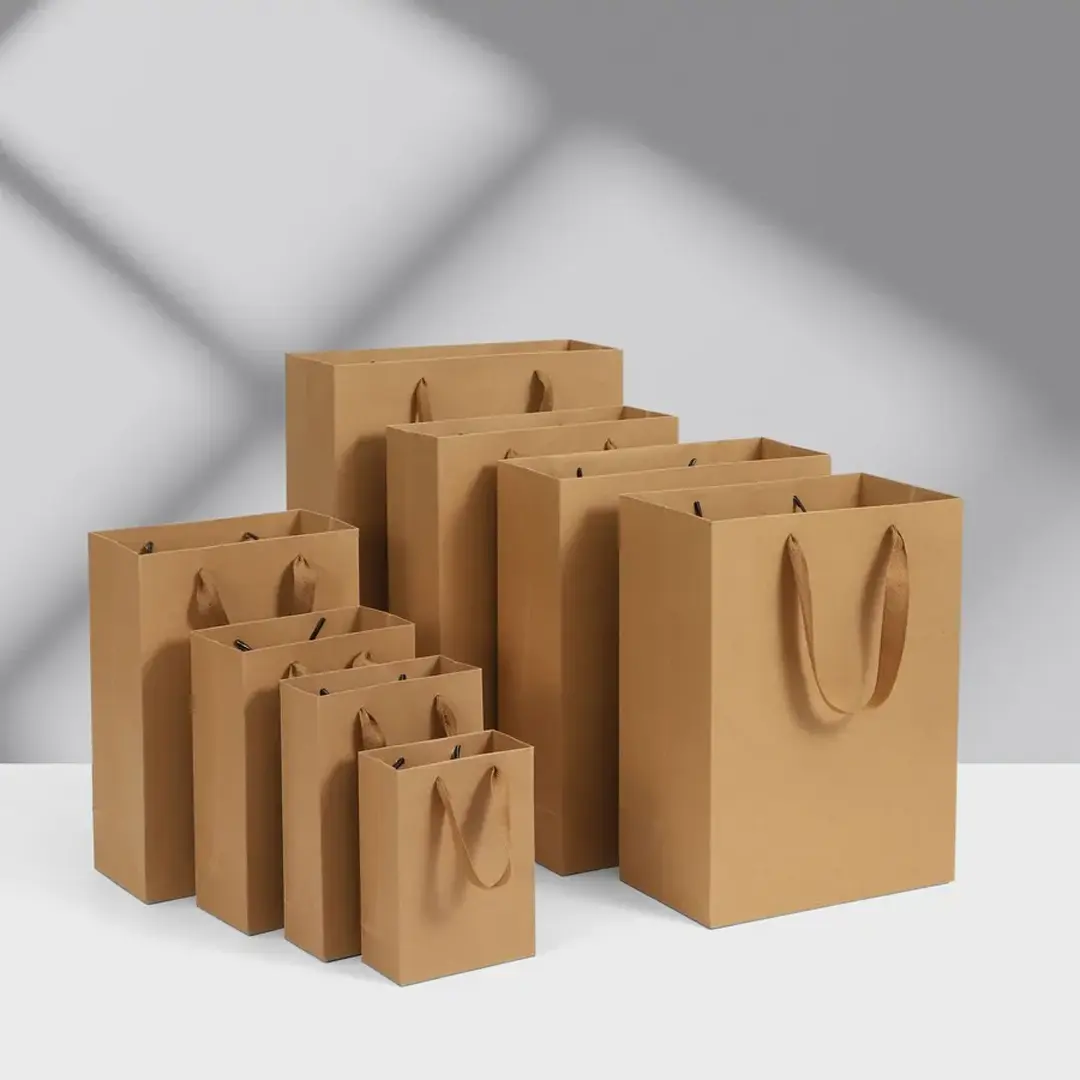
Material is the first decision that constrains everything after it. Board grade sets what the pack can carry, print behaviour and, to a large extent, cost. This guide sets out what each substrate does and where it disappoints.
Paperboard grades
Paperboard thickness is quoted in points, where one point is one thousandth of an inch.
| Grade | Thickness | Carries | Notes |
|---|---|---|---|
| 12pt SBS | 0.012 in | Up to ~1 lb | Light cosmetics, confectionery, small retail |
| 14pt SBS | 0.014 in | Up to ~2 lb | The default for most retail cartons |
| 16pt SBS | 0.016 in | Up to ~3 lb | Repeated handling, larger panels |
| 18pt SBS | 0.018 in | Up to ~4 lb | Weight or large format; past this, use corrugated |
| 18pt kraft | 0.018 in | Up to ~4 lb | Natural finish, absorbs moisture |
| Recycled CCNB | 14pt – 20pt | Similar to SBS | Greyer base, marginally less rigid |
SBS is bleached and coated, so it holds fine detail and reproduces colour accurately. Kraft is unbleached — colours print warmer and duller, and white ink needs an opaque underbase.
Corrugated flutes
Corrugated strength comes from the fluted layer, and flute size determines the trade-off between thickness, print quality and load.
| Flute | Thickness | Best for | Print quality |
|---|---|---|---|
| F-flute | ~0.8 mm | Small retail-facing boxes | Good |
| E-flute | ~1.5 mm | Mailers, retail shippers | Good |
| B-flute | ~3 mm | General shipping | Fair |
| C-flute | ~4 mm | Larger shippers | Fair |
| BC double-wall | ~6 mm | Heavy contents, high stacking | Coarse |
Specify double-wall past roughly twenty pounds of contents, or where cases stack several high on a pallet for extended periods.
Rigid greyboard
Rigid boxes use 1.5 mm to 2 mm greyboard wrapped in printed or specialty paper. They are hand-assembled, ship pre-formed rather than flat, and cost several times an equivalent folding carton.
What you buy is physical presence — weight in the hand and resistance when the lid lifts. That does more for premium positioning than print ever does. The costs are lead time and freight volume.
Laminated films
Flexible packaging is built from bonded layers, each doing a job: printed outer, barrier middle, food-safe sealant inner.
- PET/MPET/PE — high oxygen and moisture barrier, opaque, standard for coffee and snacks
- Kraft/PE — natural paper outer with a barrier inner
- Clear PET/PE — product visibility, moderate barrier
- Mono-PE — single polymer family, recyclable through store drop-off
- Kraft/PLA — certified industrial compostable
Barrier performance sets shelf life, and shelf life sets the price. Mono-material films need filling line adjustment, so trial before converting a live product.
Moulded pulp
Formed from recycled paper slurry, moulded pulp absorbs impact well and recycles cleanly. Its surface is rough and it holds looser tolerances than die-cut board, so it works as a hidden protective layer rather than a visible one. Tooling costs more than a cutting die, so it suits volume.
Choosing by weight and journey
Weigh the product and establish how it travels. Then take the lightest material that survives that journey with margin, and spend the remaining budget on print and finish rather than on board you do not need.
Where a product is fragile rather than heavy, the answer is usually structural. A fitted insert holding the item still does more for damage rates than a heavier outer, and our comparison of board, foam and moulded pulp inserts covers which material suits which product.
Reading a material specification
A complete material line names four things, and a quote that gives fewer is not comparable with one that gives more.
The grade. SBS, CCNB, kraft, greyboard — this tells you the fibre and the surface.
The caliper or flute. Thickness for solid board, letter grade for corrugated. This is what determines what the pack carries.
The coating. Aqueous, grease-resistant, moisture-resistant, or none. This is a separate decision from the board and it is frequently omitted.
The liner, on corrugated. White-top or kraft, coated or uncoated. It affects both print quality and how the board handles moisture.
Matching material to failure mode
| The pack is failing by | The material answer |
|---|---|
| Crushing in a stack | Heavier flute, or double-wall |
| Going soft in storage | Moisture-resistant coating |
| Grease showing through | Grease-resistant coating or greaseproof liner |
| Cracking at the crease | Higher residual moisture, deeper crease profile |
| Delaminating after cold storage | Coated liner, cold-tolerant adhesive |
| Contents damaged, box intact | Not a material problem — fit an insert |
That last row is the one worth remembering. A material change cannot solve a movement problem, and it is the most common misdiagnosis in packaging specification.
Barrier films
- Kraft/PE — natural paper outer with a barrier inner
- Clear PET/PE — product visibility, moderate barrier
- Mono-PE — single polymer family, recyclable through store drop-off
- Kraft/PLA — certified industrial compostable
Barrier performance sets shelf life, and shelf life sets the price. Mono-material films need filling line adjustment, so trial before converting a live product.
Moulded pulp
Formed from recycled paper slurry, moulded pulp absorbs impact well and recycles cleanly. Its surface is rough and it holds looser tolerances than die-cut board, so it works as a hidden protective layer rather than a visible one. Tooling costs more than a cutting die, so it suits volume.
Choosing by weight and journey
Weigh the product and establish how it travels. Then take the lightest material that survives that journey with margin, and spend the remaining budget on print and finish rather than on board you do not need.
Where a product is fragile rather than heavy, the answer is usually structural. A fitted insert holding the item still does more for damage rates than a heavier outer, and our comparison of board, foam and moulded pulp inserts covers which material suits which product.