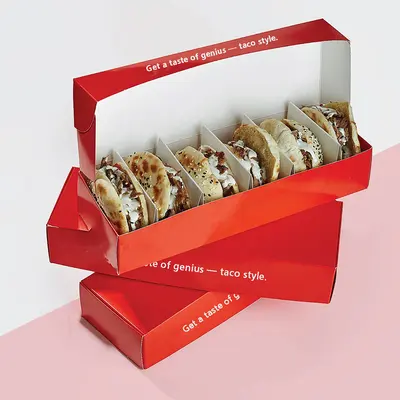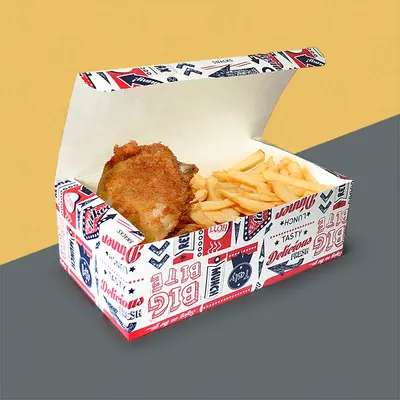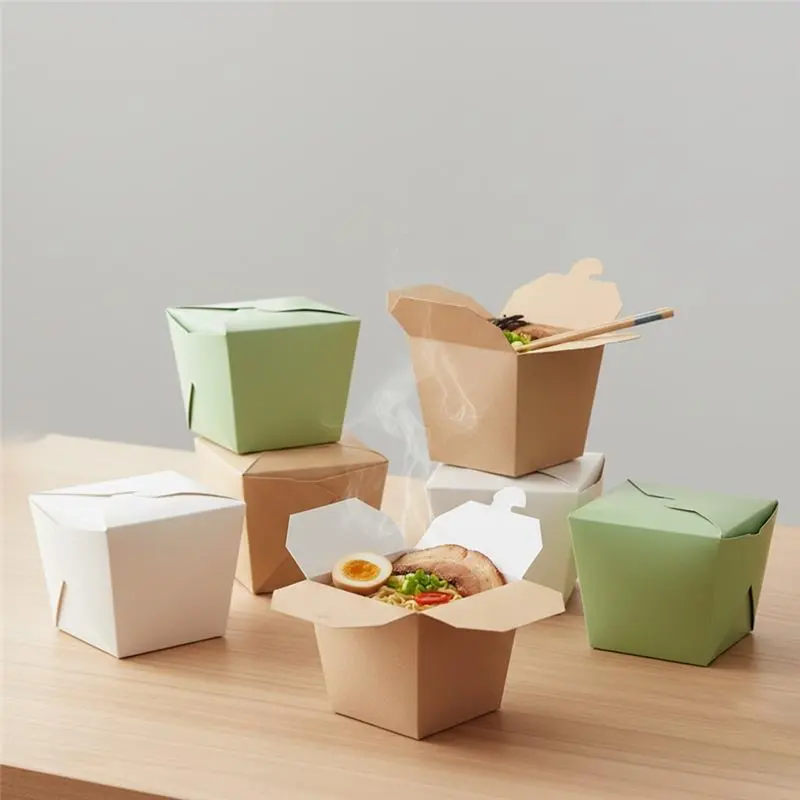
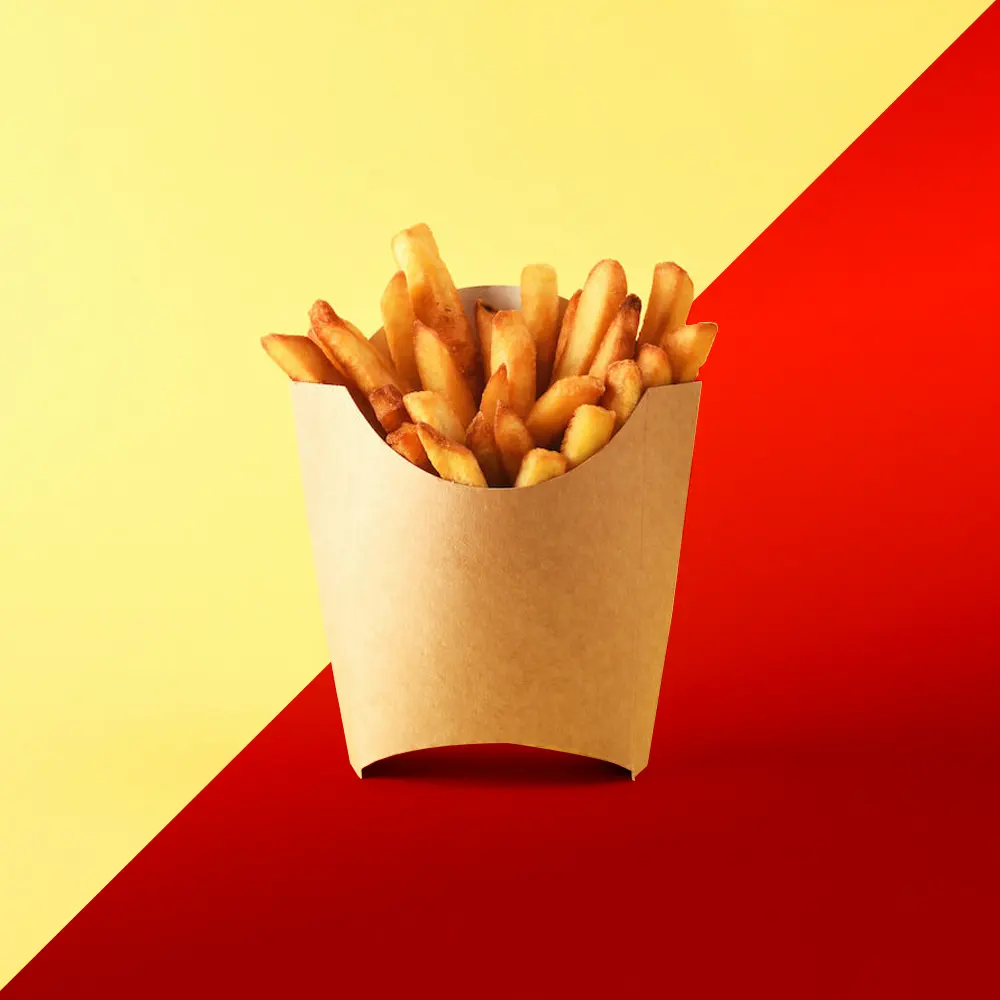
Hot and greasy
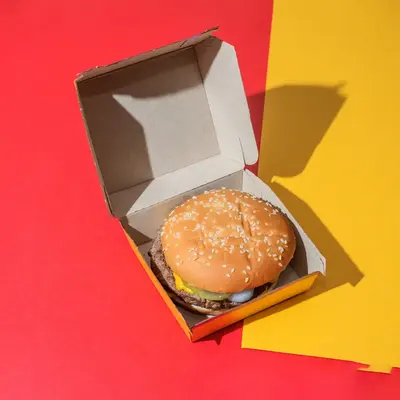
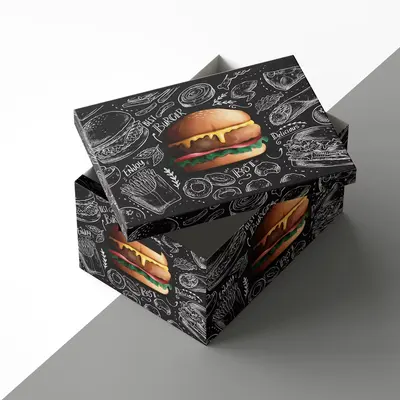
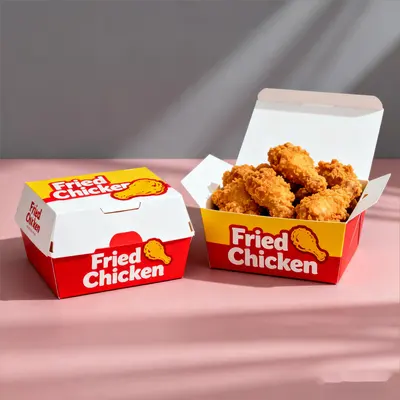
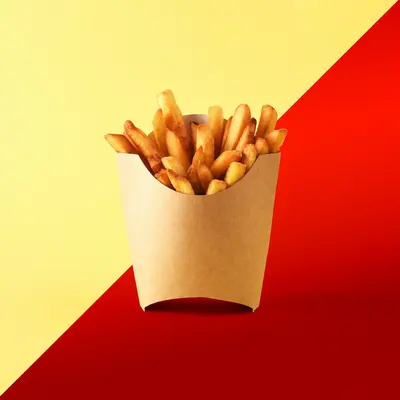
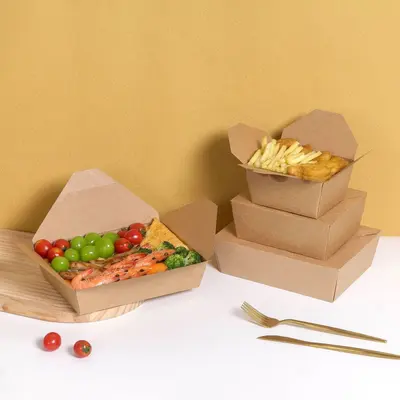
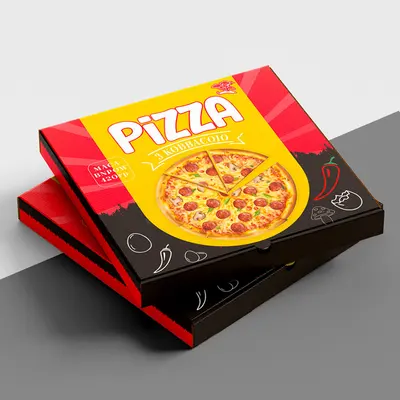
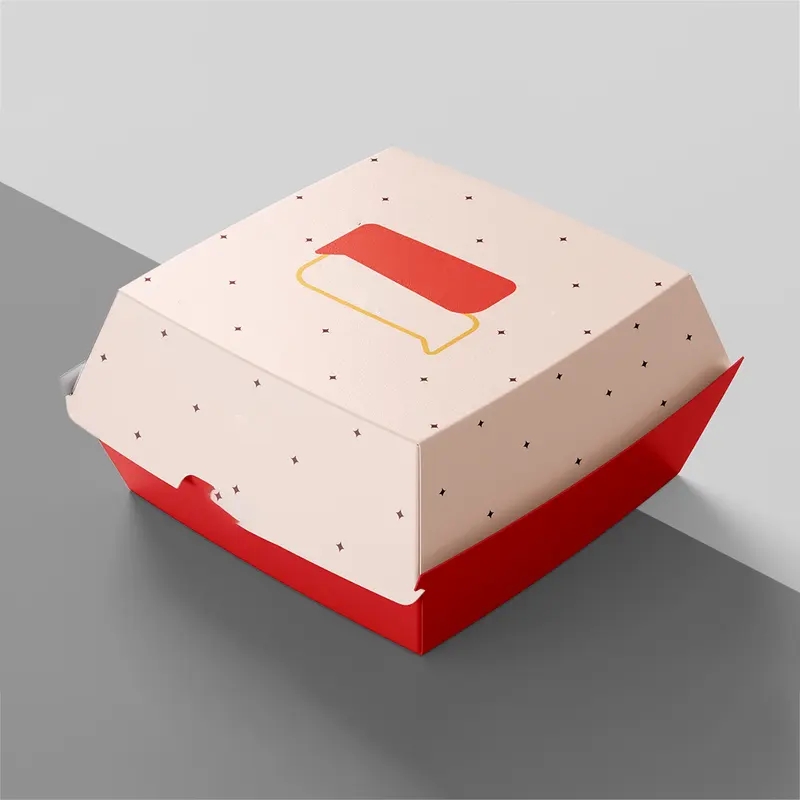
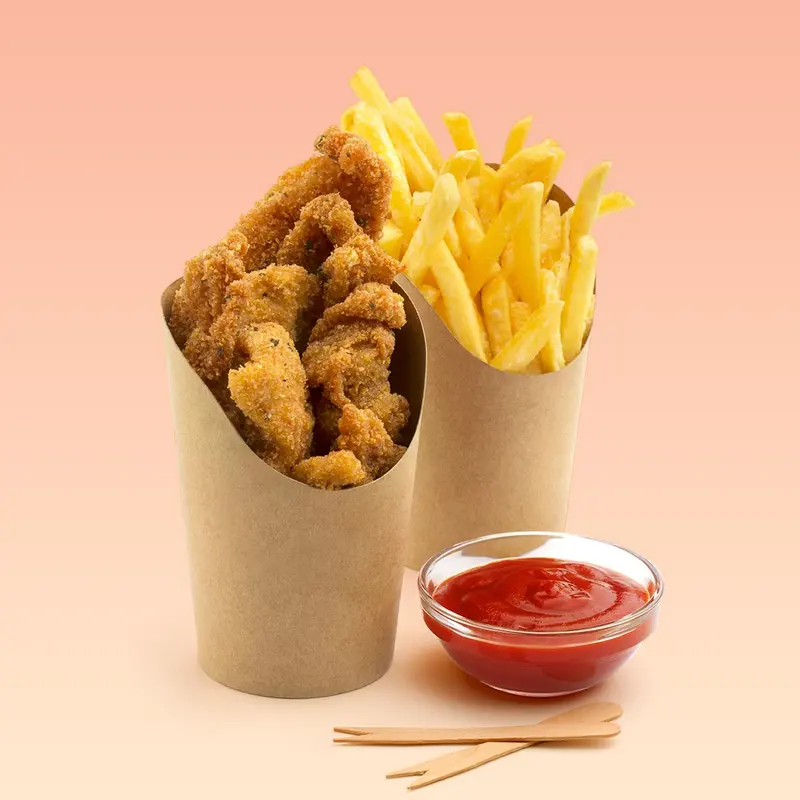
Fried food that releases oil and steam together. Grease-resistant coating and venting are both required, and they are separate decisions.
34 made-to-order formats
Hot, greasy, wet and cold each break packaging in a different way. This range is organised by the problem rather than by the shape of the box.
Four groups, by what the packaging has to survive.
Fried food that releases oil and steam together. Grease-resistant coating and venting are both required, and they are separate decisions.
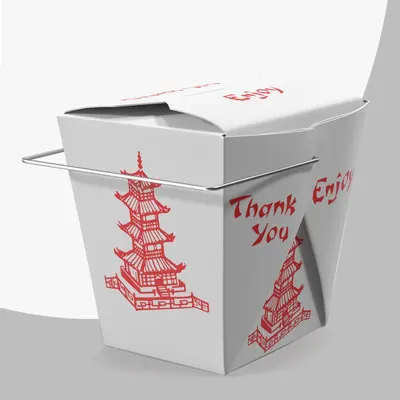
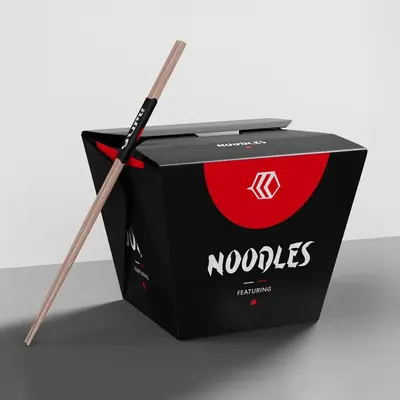
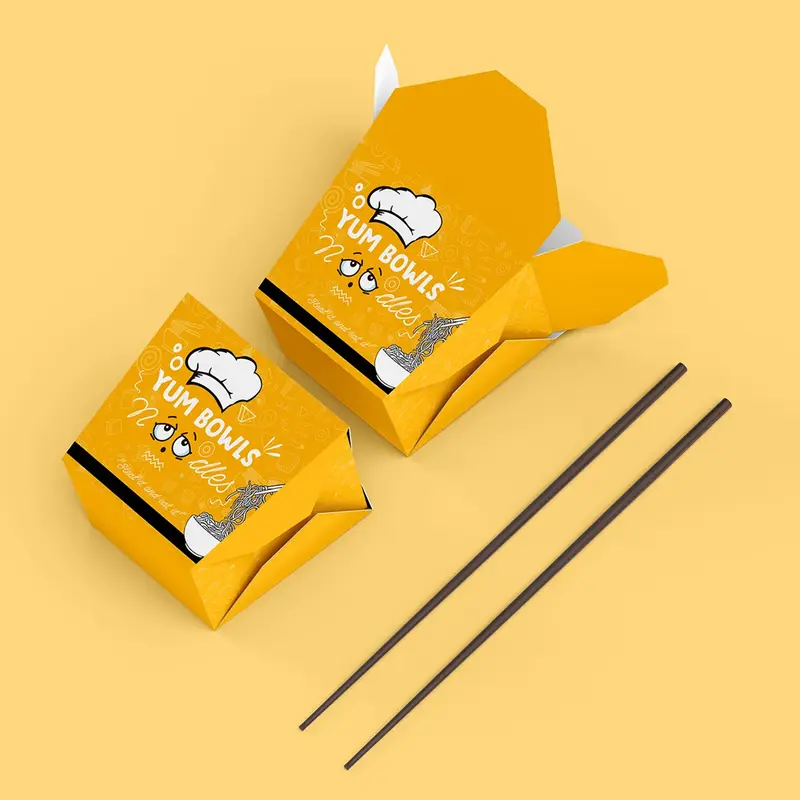
Dishes where liquid finds the weakest seam. Lining matters more than caliper, and the base fold is usually the failure point.
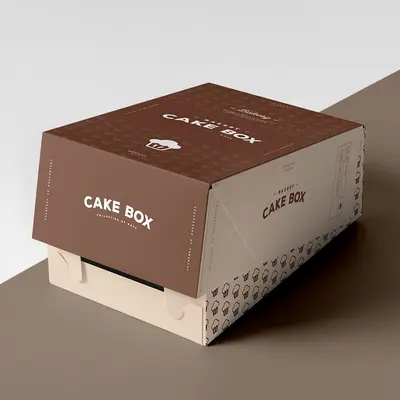
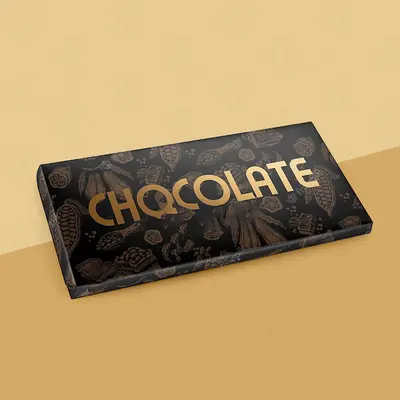
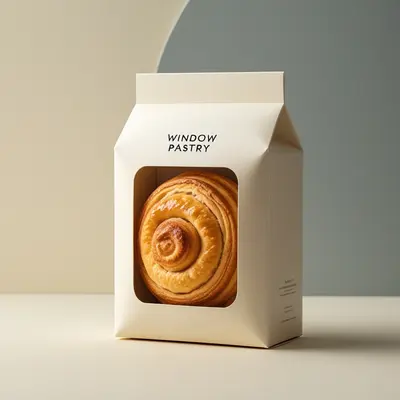
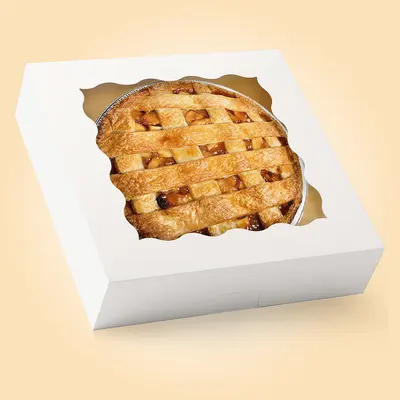
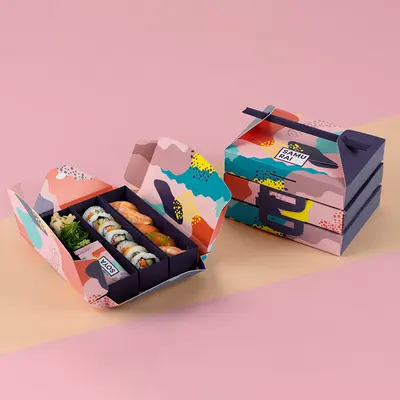
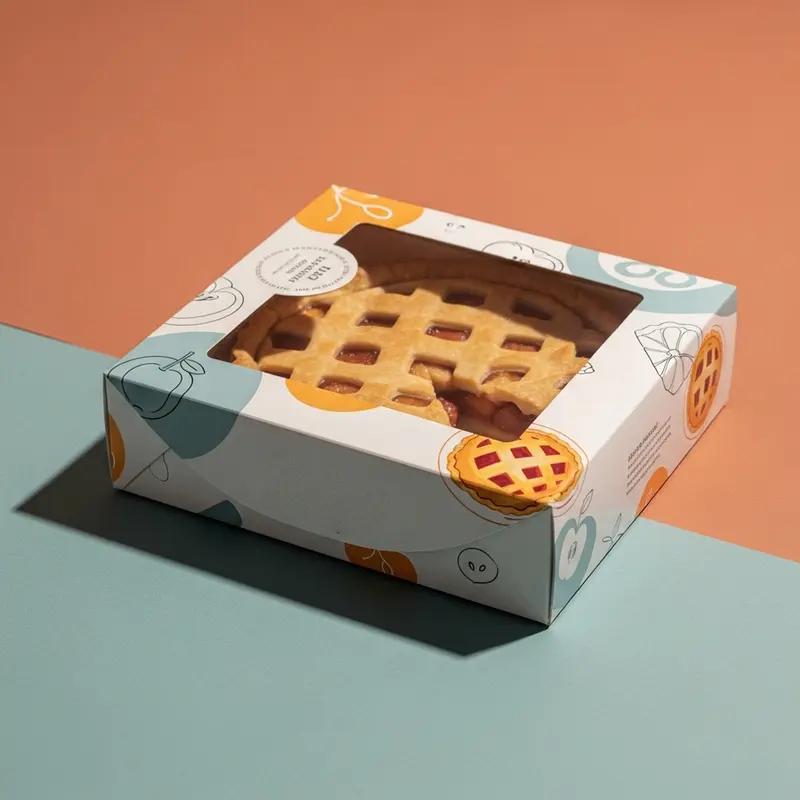
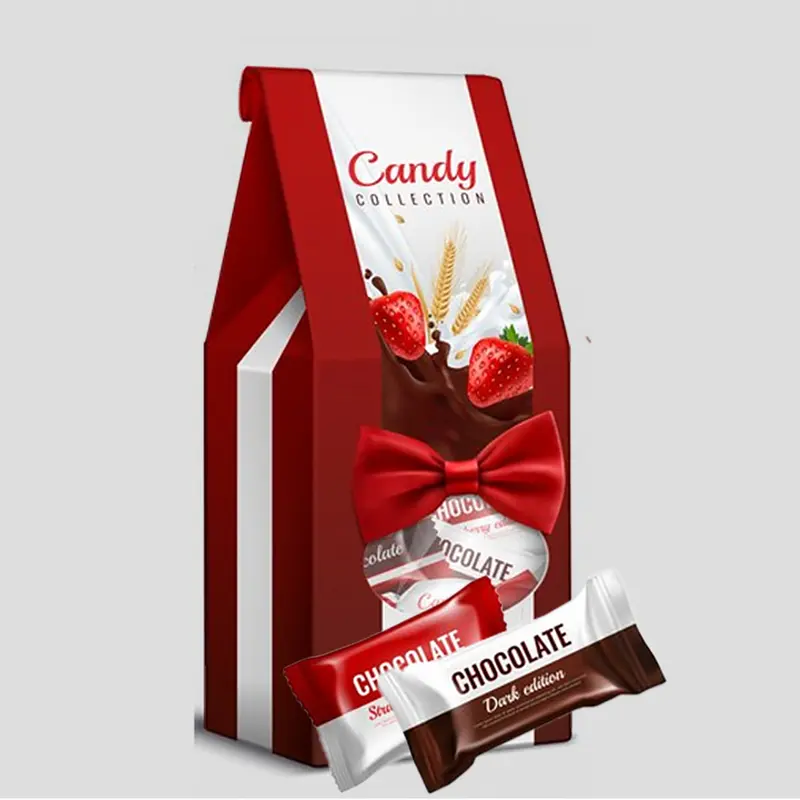
Bakery and confectionery where the product must arrive looking as it left. Cavity fit and lid clearance do the work.
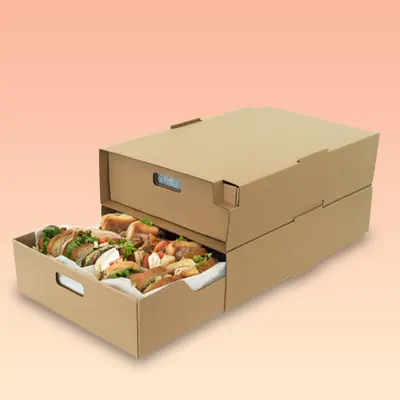
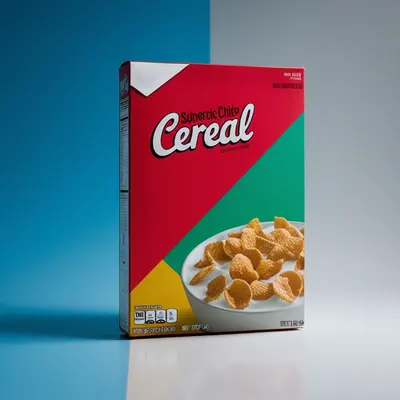
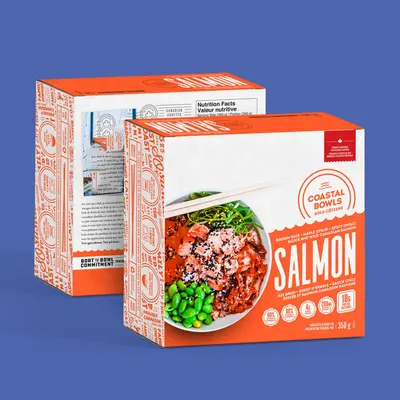
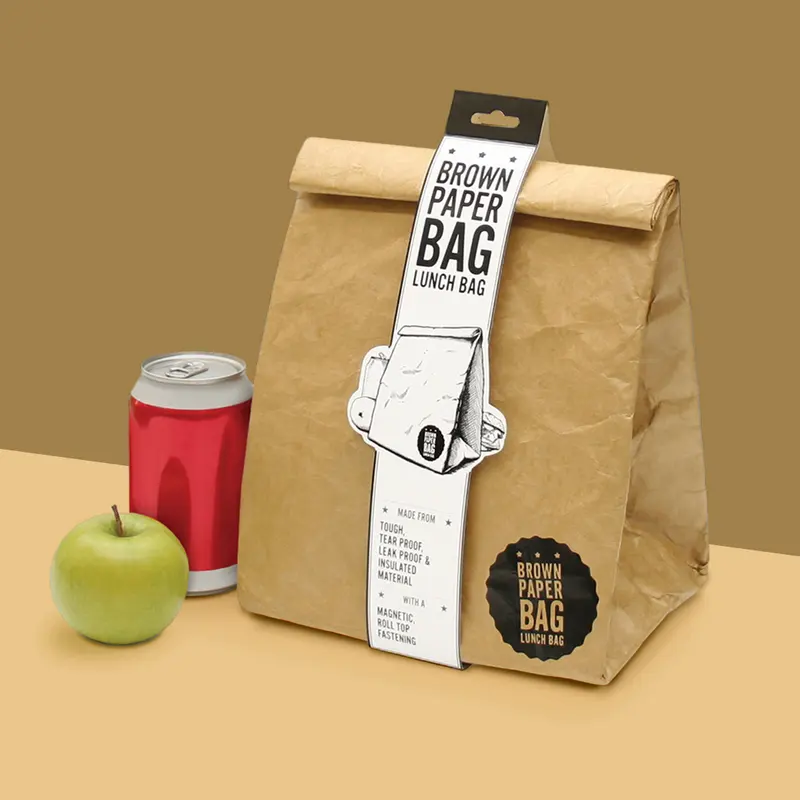
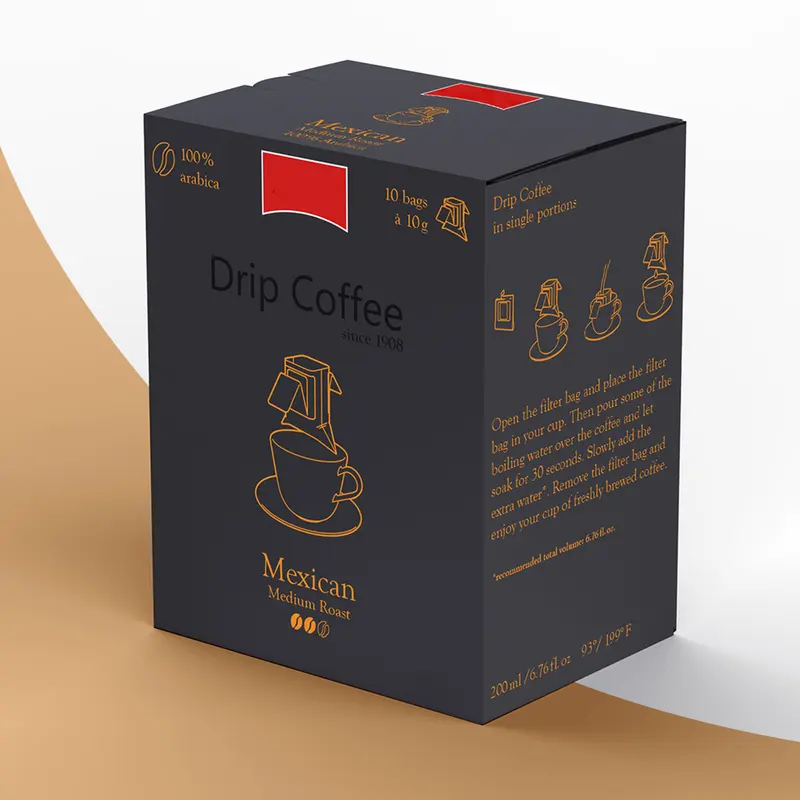
Sealed product where the carton presents and stacks rather than protects, because an inner bag carries the barrier.
Almost every food packaging complaint we are asked to solve comes down to one of four things: grease striking through the board, steam condensing and softening the contents, sauce finding a seam, or a base that fails under a hot load. The format matters far less than which of those four you are up against.
That is why picking by product name is the slow route. Tell us what the food does — how hot, how greasy, how wet, how long between kitchen and customer — and the format follows from it.
The specification that actually follows from each condition.
| If the food is | The failure to design out | What we specify |
|---|---|---|
| Hot and fried | Grease strike-through and sogginess | Grease-resistant coating plus venting |
| Hot and saucy | Leakage at the base seam | Poly or PLA lining, glued corners |
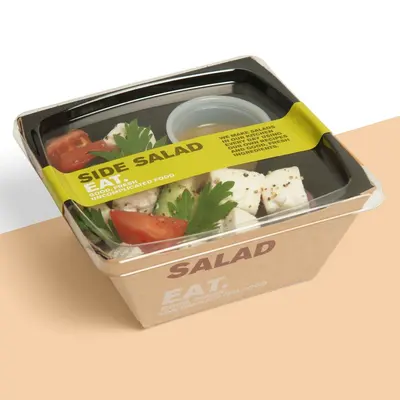
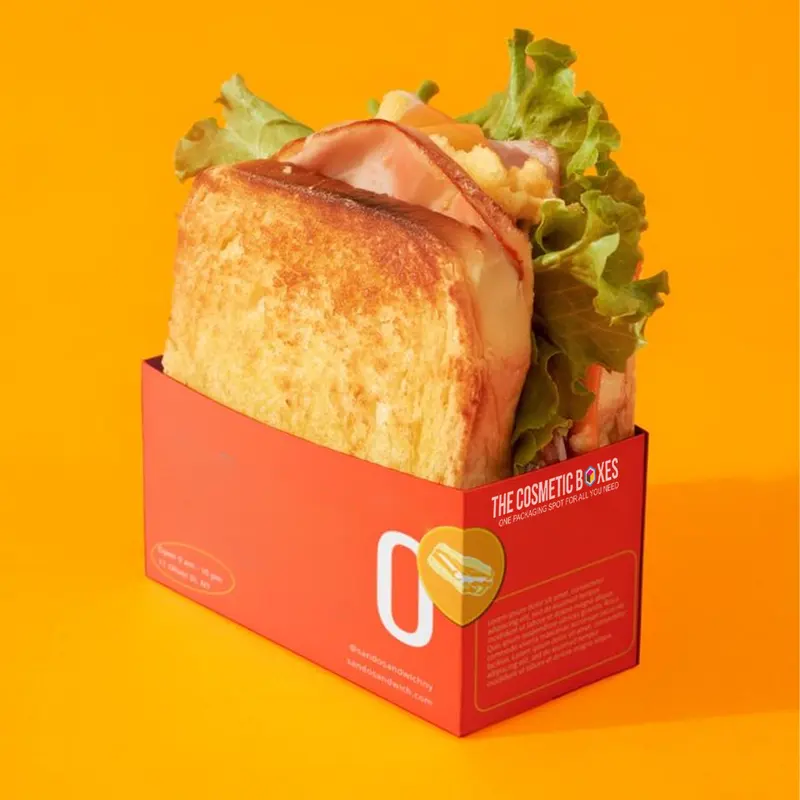
| Cold and damp | Wilting from trapped condensation | Slight ventilation, moisture-tolerant base |
| Frozen | Freeze-thaw delamination | Moisture-resistant coat, cold-tolerant adhesive |
| Dry and sealed | Nothing structural | Lighter board — the inner bag is the barrier |
The range
No format matches that. Try a shorter word, or describe what you need in a quote request.
Specification
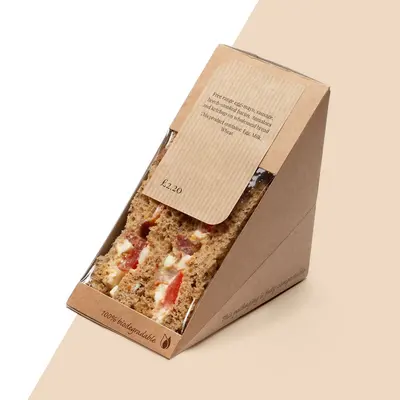
Contact time and temperature. A cold sandwich box and a hot wings box need different barriers even at the same size. Our guide to packaging board and film grades compares them on strength, print quality and cost.
Run length usually decides this. Digital wins on shorter quantities because there is no plate cost; beyond that, offset and flexo overtake it on price per unit.
Finishes are applied in the same production run. Each one adds a step, so we price them individually rather than bundling them into the base rate.
Most orders here come from food and beverage, retail and grocery brands.
Specification builder
Set what you know, leave the rest. Everything here travels with your request, so nothing gets retyped.
Drag to rotate
Recent work
Four patterns that account for most of the food packaging problems we are asked to fix.
Get a price
Send the product details and the quantity you have in mind. We reply with a specification and a written price, usually within one business day.
Prices start from $0.30 per piece for large-volume orders. Final pricing depends on size, material, printing, finishes, and quantity.
No obligation
Send us the product details and quantity. We reply with a specification and a written price, usually within one business day.
Answers
Start from what the food does rather than what the box is called. How hot, how greasy, how wet, and how long between the kitchen and the customer. Those four answers narrow 34 formats to two or three, and we can do that with you in a single message.
Where the pack touches food directly we specify compliant boards and inks. Tell us whether contact is direct or through a liner, because it changes which stocks are available and what documentation we can supply.
A grease-resistant coating or a greaseproof liner. Untreated board will always strike through eventually with hot oily food — it is a property of the material rather than a quality fault, and it is inexpensive to design out.
It depends on the dish. Fried and crisp food needs venting or it steams itself soft. Soups and wet dishes are better sealed. Getting this the wrong way round is the single most common specification error in the category.
Board contributes very little insulation. What actually helps is reducing trapped air, a well-fitting lid and venting only where the dish needs it. We would rather tell you that than sell you a heavier board that does not do the job.
Yes, though certified compostable stock generally needs industrial facilities rather than a home heap. If kerbside recycling is the realistic route for your customers, a recyclable coated board usually does more good. We will be straight about the trade-off.
A flat 100 units on any format. For a restaurant that is enough to test a pack through real deliveries before committing to a season of stock.
Yes, and it is common for food-service work. We produce the run and schedule drops against your storage capacity rather than sending everything at once.
Yes, and it is far cheaper than a new structure. Keep the same box and change the artwork, or run a plain base with a printed sleeve if the menu changes frequently.
From $0.30 per piece at large volumes. Grease-resistant coatings add a small amount; heavier boards for hot heavy contents add more. Both cost less than a remade order.
Related ranges
Next step
Send the product dimensions and the quantity you need. We come back with a specification, a lead time and a written price.