Min. 100 units · 3–5 days
Shirt Boxes
Custom Apparel Packaging
Specify thisCustom Apparel Packaging
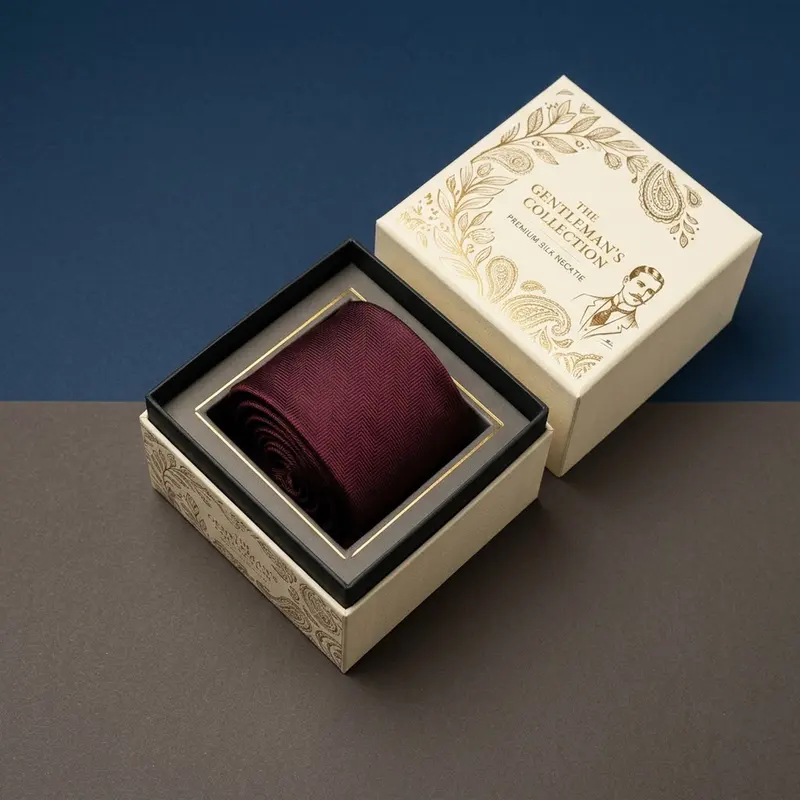
Made-to-order tie Boxes in 12pt sbs paperboard, printed to your artwork and cut to your dimensions.
No obligation
Name, email, phone and what you are packing. Attach artwork if you have it. We reply with a specification and a written price, usually within one business day.
Tie Boxes hold a rolled or folded tie, where a crease across the blade ruins the item. That is the starting point for the specification, because roll rather than fold if the box allows. A rolled tie has no crease line at all.
In service they are used for formalwear and gifting where a tie is bought as a considered purchase.
Tie Boxes are specified for formalwear and gifting where a tie is bought as a considered purchase. Roll rather than fold if the box allows. A rolled tie has no crease line at all.
16pt board sized for a rolled tie where possible, since that removes the failure entirely.
The options we would consider for this format are below; roll rather than fold if the box allows. A rolled tie has no crease line at all.
A window showing the pattern is worth it — tie buying is almost entirely a visual decision.
Offset lithography, Digital press, Flexography are all available for this format. Run length usually decides which is cheapest: digital removes the plate cost on short quantities, offset and flexo overtake it at volume.
A window showing the pattern is worth it — tie buying is almost entirely a visual decision.
The finishes below are quoted line by line. Each is an additional pass, so dropping one is a real saving rather than a rounding difference.
Long and narrow for a folded tie, or squarer for a rolled one — the two need different boxes.
Send the contents rather than a box size. The box is sized to fold the tie in a way that puts the crease across the visible blade.
Four things drive a quote more than anything else: the quantity, the print route, the board grade and the number of finishing passes. Dimensions matter too, but usually through how efficiently the shape nests on the press sheet.
Prices start from $0.30 per piece for large-volume orders. If a cheaper route exists we say so at quoting rather than after the invoice.
Cartons ship flat in bulk cases, which keeps freight cost low even on large runs.
Delivery windows are confirmed in writing when your order moves into production, and we flag any risk to the date before you approve rather than after.
Supply artwork on the dieline we send you, with 3 mm bleed past every trim edge and all text held 4 mm inside the fold lines.
Supply a print-ready PDF or vector file with fonts outlined and images at 300 dpi. Our prepress team checks every file before a proof is issued. The check that catches most files is type sitting too close to a crease, which is easier to move at layout than at proof.
Start with dimensions and quantity. If you already run something similar, a physical sample tells us more in a minute than a specification does in a page.
You approve the quote, we send the dieline, prepress proofs it, and production follows. The proof stage is where changes are still free.
Ask for an unprinted sample if the question is fit, or a printed prototype if the question is colour. They answer different things.
Sample costs are normally credited against the production order.
Reference
| Product | Tie Boxes |
|---|---|
| Category | Custom Apparel Packaging |
| Construction | Die-cut, creased and seam-glued |
| Board thickness | 12pt – 18pt depending on product weight |
| Ships as | Flat-packed, glued one seam |
| Materials | 12pt SBS paperboard, 14pt SBS paperboard, 16pt SBS paperboard, 18pt kraft board |
| Printing | Offset lithography, Digital press, Flexography |
| Finishes | Gloss lamination, Matte lamination, Soft-touch lamination, Spot UV, Foil stamping |
| Minimum order | Minimum order is 100 units on any format, and unit cost falls sharply as the quantity rises. |
| Lead time | 3 to 5 business days after artwork approval |
| Shipping | Across the US, UK, Canada and Australia |
Specification builder
Set what you know, leave the rest. Everything here travels with your request, so nothing gets retyped.
Drag to rotate
What you get
Long and narrow for a folded tie, or squarer for a rolled one — the two need different boxes.
A crease forms across the tie blade, which is visible whenever the tie is worn.
Specified for formalwear and gifting where a tie is bought as a considered purchase.
Roll rather than fold if the box allows. A rolled tie has no crease line at all.
This format sits in our custom apparel packaging range, alongside 12 other made-to-order formats.
Answers
Specification, minimums and lead times for tie boxes.
Rolled where the box allows. A folded tie carries a crease across the blade that shows whenever it is worn, and rolling removes the failure rather than mitigating it.
Very often. Apparel moves in cartons out of habit rather than need, and a flat mailer removes both volume and weight. For non-fragile soft goods the protection is usually sufficient and the freight saving is immediate.
Flat and glued along one seam, so they pop open on your packing line. That keeps freight cost down considerably compared with a pre-assembled structure.
Every run is cut to your dimensions — there are no stock sizes here. Send the product measurements rather than a box size and we will build the folding carton around them, then send a dieline template you can design onto.
We issue a dieline template sized to your product, prepress checks your artwork against it, and a proof comes back for sign-off. Nothing runs until you approve that proof, and folding cartons then take 3 to 5 business days.
Yes. Once a first run is approved we hold the board, structure, dimensions, print method and finishes against your account, so a reorder references the same specification exactly rather than being re-derived. It also means a reorder can be priced against a larger quantity without re-opening the specification.
Recycled grades are available across most of the substrates we run for folding cartons. Recycled content, kerbside recyclability and certified compostability are three different claims though, so tell us which one you intend to print.
A print-ready PDF or a vector file, with fonts outlined and any raster images at 300 dpi at final size. We supply the dieline to design onto, and prepress checks bleed, safe area and crease clearance before issuing a proof. The dieline we supply carries the crease positions, so keeping type clear of a crease is easier to solve at layout than at proof.
A flat 100 units on any format. Most folding cartons in this range are quoted from 100 units upward because unit cost falls sharply above that, but the minimum exists so you can validate a structure first.
3 to 5 business days after artwork approval, plus freight. Folding carton runs with applied finishes can take longer because each finish is a separate pass, and we confirm a firm date in writing with the quote.
Prices start from $0.30 per piece for large-volume orders. For this format the biggest levers are quantity, print route, board grade and how many finishing passes are involved. We quote each element separately so you can see where the money is going. Finishing passes are the lever buyers most often underestimate: each one is a separate run through the line.
Yes. We can send a plain unprinted sample so you can check the fit and structure, or a printed prototype for colour and finish. Sample costs are normally credited against the production order. A plain sample answers fit and structure; a printed one answers colour. On tie boxes it is usually fit that is worth checking first.
Related formats
Next step
Send the dimensions and quantity you need. We reply with a full specification and a written price, usually within one business day.