Min. 100 units · 3–5 days
Ring Boxes
Custom Jewellery Boxes
Specify thisCustom Jewellery Boxes
Earring Boxes built to your specification — your dimensions, your board, your print.
No obligation
Name, email, phone and what you are packing and the finish you have in mind. Attach artwork if you have it. We reply with a specification and a written price, usually within one business day.
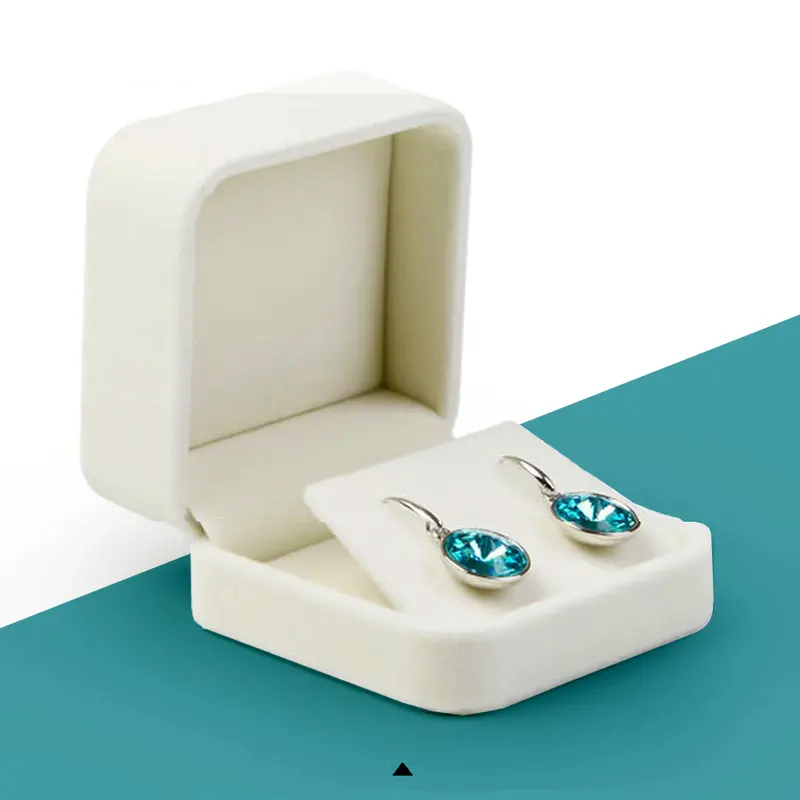
A pierced pad the posts push through, or a slotted card for hooks. The pad has to grip the fitting, not just sit under it.
Earring Boxes are built from greyboard wrapped in a printed or specialty paper, assembled by hand so the walls stay rigid and the lid holds its shape.
Earring Boxes hold a pair of small items with posts or hooks that must stay paired and stay put. That is the starting point for the specification, because a pierced pad the posts push through, or a slotted card for hooks. The pad has to grip the fitting, not just sit under it.
In service they are used for jewellery retail and small-parcel shipping, where the item is worth many times the cost of the pack.
Where a product needs to be held still, a fitted insert cut to its profile does more for damage rates than a heavier outer board. It usually costs less too, because you can drop a grade on the outer.
Rigid board with a slit foam pad, or a folding carton with a card fitment for lower price points.
The options we would consider for this format are below; a pierced pad the posts push through, or a slotted card for hooks. The pad has to grip the fitting, not just sit under it.
Among the smallest formats we make, commonly 2 × 2 × 1 in, and sized to the pad rather than to the earrings.
Send the contents rather than a box size. A plain foam pad is specified without pierced holes, so posts sit on the surface with nothing holding them.
The printable area is tiny. One mark and one line of type is usually all that reads at this size.
The finishes below are quoted line by line. Each is an additional pass, so dropping one is a real saving rather than a rounding difference.
Foil, soft-touch and deboss all read differently in person than on a screen, so we recommend a printed prototype rather than a digital proof alone for anything finish-led.
Sample costs are normally credited against the production order.
Send the product dimensions, the quantity and your deadline. What comes back is a board grade, a structure, a print method, a lead time and a written price — not a number on its own.
A dieline template follows, then a proof. For finish-led work we usually recommend a physical prototype at this point, because foil and soft-touch do not read accurately on screen.
Reference
| Product | Earring Boxes |
|---|---|
| Category | Custom Jewellery Boxes |
| Construction | Hand-wrapped rigid greyboard |
| Board thickness | 1.5 mm – 2 mm greyboard |
| Ships as | Pre-assembled, nested where possible |
| Materials | 1200gsm greyboard with printed wrap, 1400gsm greyboard, Specialty textured wrap paper, Linen-finish wrap |
| Printing | Offset-printed wrap, Digital-printed wrap, Screen printing on wrap |
| Finishes | Foil stamping, Embossing, Debossing, Soft-touch lamination, Spot UV |
| Minimum order | Minimum order is 100 units on any format, and unit cost falls sharply as the quantity rises. |
| Lead time | 3 to 5 business days after artwork approval |
| Shipping | Across the US, UK, Canada and Australia |
Specification builder
Set what you know, leave the rest. Everything here travels with your request, so nothing gets retyped.
Drag to rotate
What you get
Among the smallest formats we make, commonly 2 × 2 × 1 in, and sized to the pad rather than to the earrings.
One earring works loose, migrates under the pad and is assumed lost, which turns a small item into a full replacement.
Specified for jewellery retail and small-parcel shipping, where the item is worth many times the cost of the pack.
A pierced pad the posts push through, or a slotted card for hooks. The pad has to grip the fitting, not just sit under it.
This format sits in our custom jewellery boxes range, alongside 6 other made-to-order formats.
Answers
Specification, minimums and lead times for earring boxes.
The pad has to be pierced or slotted so the post or hook is gripped rather than resting on the surface. A flat unpierced pad holds nothing once the box is turned over, and that is the single most common cause of a "missing" earring.
Because they are hand-assembled rather than machine-glued, and because the wrap, corner finish and interior lining are each separate operations. They also ship assembled rather than flat, which raises freight. The trade is a structure that feels substantially different in the hand.
Ones that read from arm’s length. Soft-touch lamination and deboss change how the whole pack reads; a small foil detail often does not survive the distance between shelf and eye. We quote each pass separately so you can judge.
Rarely without compromise. A box built to present is not built to survive a carrier network alone. A presentation box inside a plain protective outer usually costs less overall than one box trying to do both.
Yes, which is part of why their freight cost is higher than a folding carton. Collapsible rigid constructions exist and ship flatter, at some cost to the feel of the finished box.
A print-ready PDF or a vector file, with fonts outlined and any raster images at 300 dpi at final size. We supply the dieline to design onto, and prepress checks bleed, safe area and crease clearance before issuing a proof. A wrapped box needs bleed carried around the turn-in as well as the visible face, which is more artwork area than the outside dimensions suggest.
A flat 100 units on any format. Most rigid boxes in this range are quoted from 100 units upward because unit cost falls sharply above that, but the minimum exists so you can validate a structure first.
3 to 5 business days after artwork approval, plus freight. Rigid box runs with applied finishes can take longer because each finish is a separate pass, and we confirm a firm date in writing with the quote.
Prices start from $0.30 per piece for large-volume orders. For this format the biggest levers are quantity, print route, board grade and how many finishing passes are involved. We quote each element separately so you can see where the money is going. Rigid construction is hand-assembled, so labour is a larger share of the unit cost here than it is on a machine-glued carton and quantity discounts flatten out sooner.
Yes. We can send a plain unprinted sample so you can check the fit and structure, or a printed prototype for colour and finish. Sample costs are normally credited against the production order. Ask for the printed prototype rather than the plain sample if the question is finish — soft-touch, foil and deboss all read differently in the hand than on a screen.
Send the current specification or a physical sample and we will quote to match it rather than proposing an alternative you would then have to re-approve internally. Send the physical box rather than a photograph. Wrap stock, corner finish and interior lining are what make a rigid box feel the way it does, and none of them photograph.
All 50 US states, the United Kingdom, Canada and Australia, on the same timeline everywhere: 3 to 5 business days of production after artwork approval, then 5 to 7 business days in transit. Every run is made to order and shipped directly to your address rather than pulled from stock, so you receive current production rather than whatever has been sitting in a warehouse. Freight is costed separately by weight, volume and destination. Rigid boxes ship assembled rather than flat, so they take considerably more space in transit than a folding carton of the same finished size. It is worth factoring into the landed cost.
Related formats
Next step
Send the dimensions, the quantity and the finish you want. We reply with a full specification and a written price, usually within one business day.