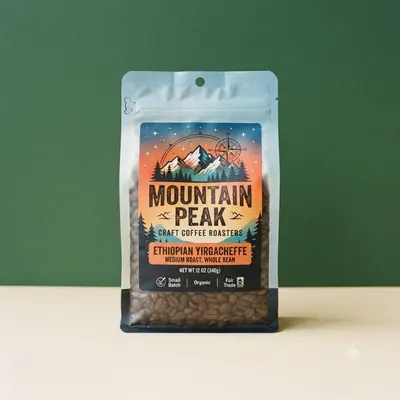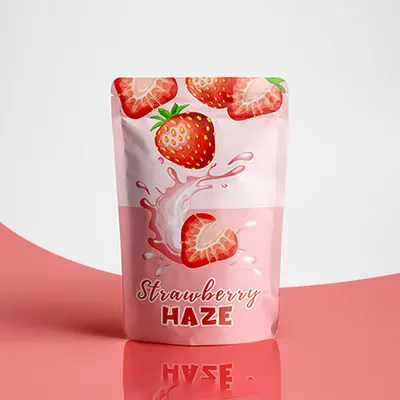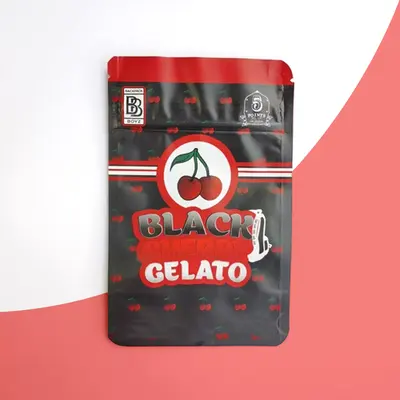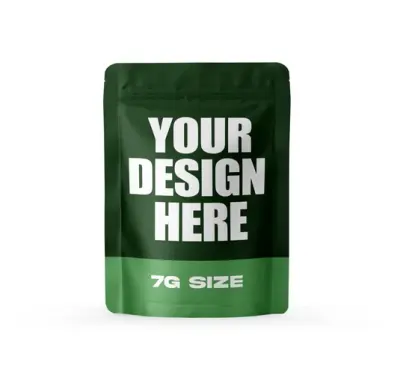
Min. 100 units · 3–5 days
Mylar Bag
Custom Pouches
Specify thisCustom Pouches
Custom mylar Foil Bags produced to your size and substrate, with printing and finishing handled in one run.
No obligation
Name, email, phone and what you are packing. Attach artwork if you have it. We reply with a specification and a written price, usually within one business day.
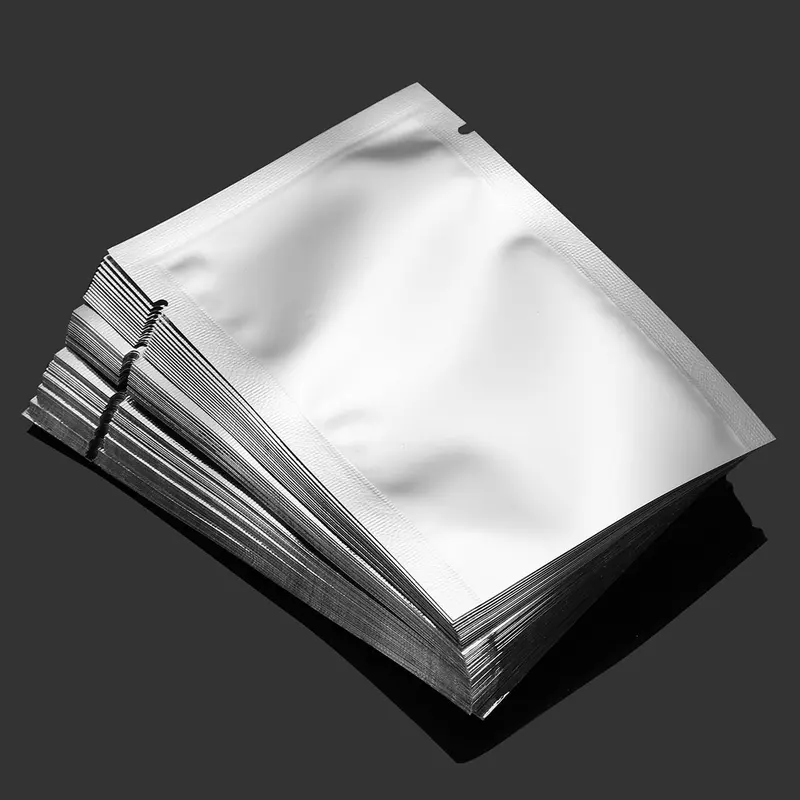
Mylar Foil Bags hold products where the highest available barrier is required and shelf life is measured in years. That is the starting point for the specification, because foil gives the best barrier and the worst flex tolerance. For products handled repeatedly, a metallised film often performs better in practice.
In service they are used for long-life dry goods, pharmaceuticals and anything with a multi-year shelf requirement.
Mylar Foil Bags are specified for long-life dry goods, pharmaceuticals and anything with a multi-year shelf requirement. Foil gives the best barrier and the worst flex tolerance. For products handled repeatedly, a metallised film often performs better in practice.
An aluminium foil layer between polyester and polyethylene. The foil does the work; the outer prints and the inner seals.
The options we would consider for this format are below; foil gives the best barrier and the worst flex tolerance. For products handled repeatedly, a metallised film often performs better in practice.
Flex cracking. A true foil layer is thin metal and develops pinholes where the pouch is repeatedly bent.
Paperboard also absorbs moisture from the air until it equalises with its surroundings. If stock sits more than about six weeks in unconditioned space, a moisture-resistant coating is worth its small premium.
The honest trade-offs between the stocks we would consider for this format.
| Material | Barrier | Recovery route |
|---|---|---|
| Uncoated kraft | None | Dry goods, short shelf life |
| Aqueous coated | Light moisture | Keeps paper recyclable |
| Foil laminate | Oxygen and moisture | Longest shelf life, not kerbside recyclable |
| Mono-material film | Good, shorter life | Store drop-off recycling |
Foil laminates take print via the outer polyester layer. A white underbase is essential for accurate colour.
Rotogravure, Digital film printing, Flexography are all available for this format. Run length usually decides which is cheapest: digital removes the plate cost on short quantities, offset and flexo overtake it at volume.
Foil laminates take print via the outer polyester layer. A white underbase is essential for accurate colour.
The finishes below are quoted line by line. Each is an additional pass, so dropping one is a real saving rather than a rounding difference.
Across the range, though foil laminates are most commonly specified in smaller retail sizes.
Send the contents rather than a box size. Foil is specified as the best barrier without accounting for handling — a bag flexed repeatedly loses the barrier it was chosen for.
Build artwork to the flat pouch dieline including the gusset panels, and keep barcodes on a flat face rather than across a seal.
Supply a print-ready PDF or vector file with fonts outlined and images at 300 dpi. Our prepress team checks every file before a proof is issued. On a pouch the check that matters most is that copy clears the seal areas, which are not printable.
The useful starting point is the product, not the pack. Give us its measurements and the quantity, and we work the pouch outward from there.
A dieline template follows, sized to your product. Prepress checks your artwork against it and issues a proof; nothing runs until you sign that off.
Ask for an unprinted sample if the question is fit, or a printed prototype if the question is colour. They answer different things.
Sample costs are normally credited against the production order.
Reference
| Product | Mylar Foil Bags |
|---|---|
| Category | Custom Pouches |
| Construction | Pouch |
| Structure | Multi-layer laminated film |
| Barrier | Moisture and oxygen barrier available |
| Closure | Heat seal, optional resealable zipper |
| Materials | PET/MPET/PE laminate, Kraft paper/PE laminate, Clear PET/PE laminate, Recyclable mono-PE |
| Printing | Rotogravure, Digital film printing, Flexography |
| Finishes | Matte film, Gloss film, Soft-touch film, Spot gloss over matte, Metallised layer |
| Minimum order | Minimum order is 100 units on any format, and unit cost falls sharply as the quantity rises. |
| Lead time | 3 to 5 business days after artwork approval |
| Shipping | Across the US, UK, Canada and Australia |
Specification builder
Set what you know, leave the rest. Everything here travels with your request, so nothing gets retyped.
Drag to rotate
In practice
Across the range, though foil laminates are most commonly specified in smaller retail sizes.
Flex cracking. A true foil layer is thin metal and develops pinholes where the pouch is repeatedly bent.
Specified for long-life dry goods, pharmaceuticals and anything with a multi-year shelf requirement.
Foil gives the best barrier and the worst flex tolerance. For products handled repeatedly, a metallised film often performs better in practice.
This format sits in our custom pouches range, alongside 26 other made-to-order formats.
Answers
Specification, minimums and lead times for mylar foil bags.
For raw barrier, yes. For a bag that gets handled and flexed repeatedly, no — foil is thin metal and develops pinholes at fold lines. Metallised film flexes better and often performs better in real use.
Through store drop-off in many areas rather than kerbside collection. Mono-material polyethylene is the more recyclable option; mixed-material films generally are not. If recyclability is a stated claim, tell us and we will keep to a mono-material construction.
It depends on shelf life and what degrades the product — oxygen, moisture or light. A higher barrier costs more and is usually harder to recycle, so the right answer is the lowest barrier that holds your product for as long as it needs to.
Not currently, and it is better to be straight about it. Multi-layer laminates block best precisely because they combine materials, which is what makes them hard to recycle. Mono-material films are recyclable through store drop-off but give a shorter shelf life.
Both are standard options. A zip suits anything the customer opens repeatedly; a one-way valve is for products that off-gas, such as freshly roasted coffee, where a sealed bag would otherwise inflate.
A print-ready PDF or a vector file, with fonts outlined and any raster images at 300 dpi at final size. We supply the dieline to design onto, and prepress checks bleed, safe area and crease clearance before issuing a proof. The dieline we supply carries the crease positions, so keeping type clear of a crease is easier to solve at layout than at proof.
A flat 100 units on any format. Most pouches in this range are quoted from 100 units upward because unit cost falls sharply above that, but the minimum exists so you can validate a structure first.
3 to 5 business days after artwork approval, plus freight. Pouch runs with applied finishes can take longer because each finish is a separate pass, and we confirm a firm date in writing with the quote.
Prices start from $0.30 per piece for large-volume orders. For this format the biggest levers are quantity, print route, board grade and how many finishing passes are involved. We quote each element separately so you can see where the money is going. On this format the film structure and whether you need a zip or a valve move the price more than quantity does at small volumes.
Yes. We can send a plain unprinted sample so you can check the fit and structure, or a printed prototype for colour and finish. Sample costs are normally credited against the production order. A plain sample answers fit and structure; a printed one answers colour. On mylar foil bags it is usually fit that is worth checking first.
Send the current specification or a physical sample and we will quote to match it rather than proposing an alternative you would then have to re-approve internally. A physical sample tells us more than a specification sheet — board caliper and coating are usually described loosely and measured exactly.
All 50 US states, the United Kingdom, Canada and Australia, on the same timeline everywhere: 3 to 5 business days of production after artwork approval, then 5 to 7 business days in transit. Every run is made to order and shipped directly to your address rather than pulled from stock, so you receive current production rather than whatever has been sitting in a warehouse. Freight is costed separately by weight, volume and destination. This format nests or lies flat, so a large quantity takes up far less freight volume than the finished pack suggests.
Related formats
Next step
Send the dimensions and quantity you need. We reply with a full specification and a written price, usually within one business day.